UX for industrial-grade software used by maintenance engineers in offshore environments
Tag page
UX for industrial-grade software used by maintenance engineers in offshore environments
Tag page
(Services)
(Services)
Product design
Product design
,
,
(Industry)
(Industry)
SaaS
SaaS
(Year)
(Year)
2025
2025
(Information)
(Information)
Team:
1 Product Manager
1 Lead Designer
1 Lead Engineer
4 Engineers
Tools:
Figma
FigJam
MiroNotion
GitLab
Jira
Dovetail
Team:
1 Product Manager
1 Lead Designer
1 Lead Engineer
4 Engineers
Tools:
Figma
FigJam
Miro
Notion
GitLab
Jira
Dovetail
(Information)
(Information)
Context
Aize is a complex software platform used for operating and maintaining oil & gas assets.
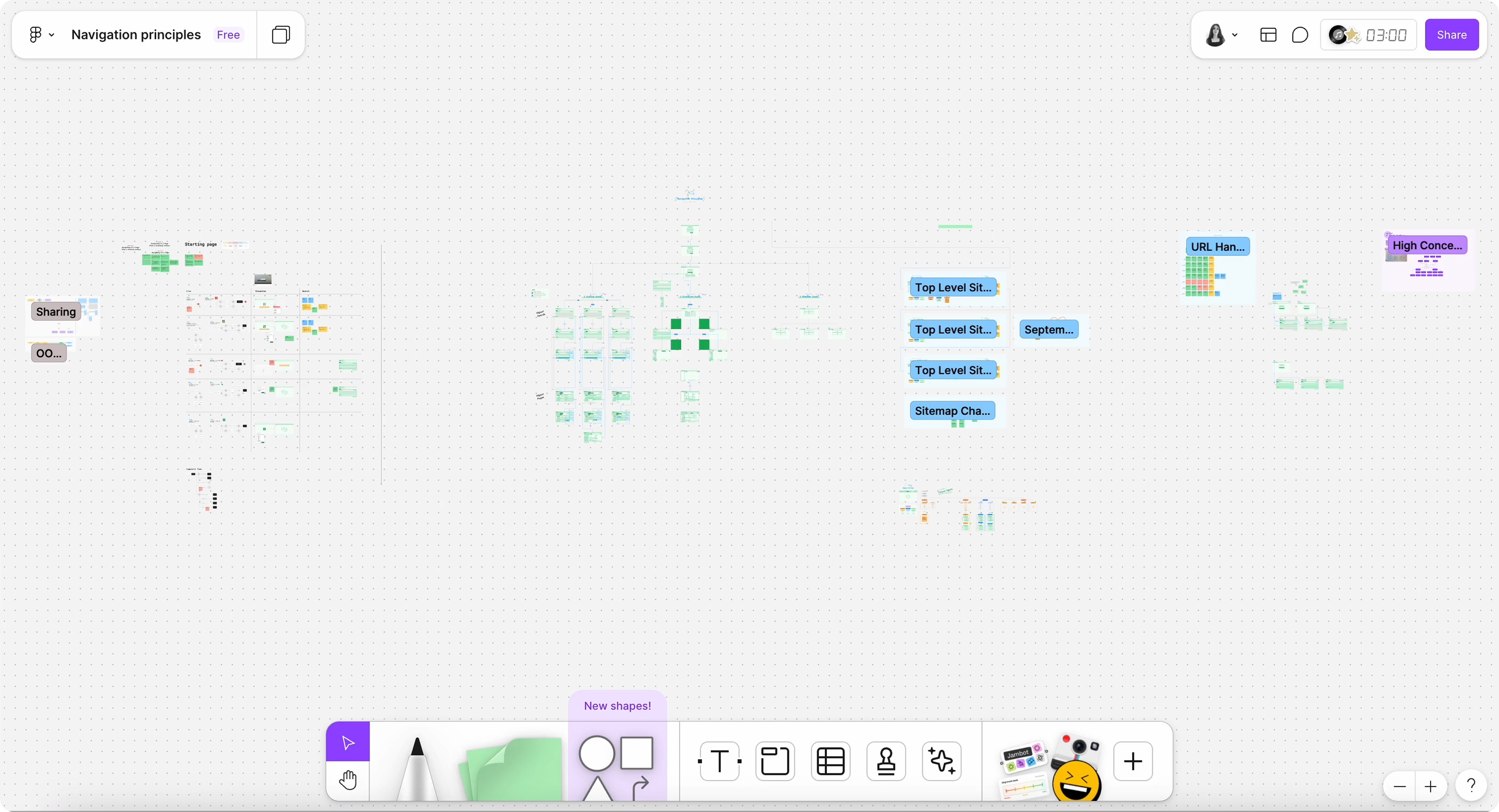
As part of a broader redesign effort, I collaborated on restructuring the platform’s Information Architecture (IA) to better support the workflows of engineers, planners, and operators.
Challenge
The existing IA had grown organically and lacked clarity around its core objects and surfaces.
One major challenge was to define the key entities in the system and ensure that every surface aligned with real user goals.
Among these, the Tag Page stood out as a critical screen where various types of data converge.
Goals
Our aim was to define and align the platform’s core objects across teams, simplify navigation in a data-dense environment, and support the daily work of users in high-risk, high-complexity contexts.
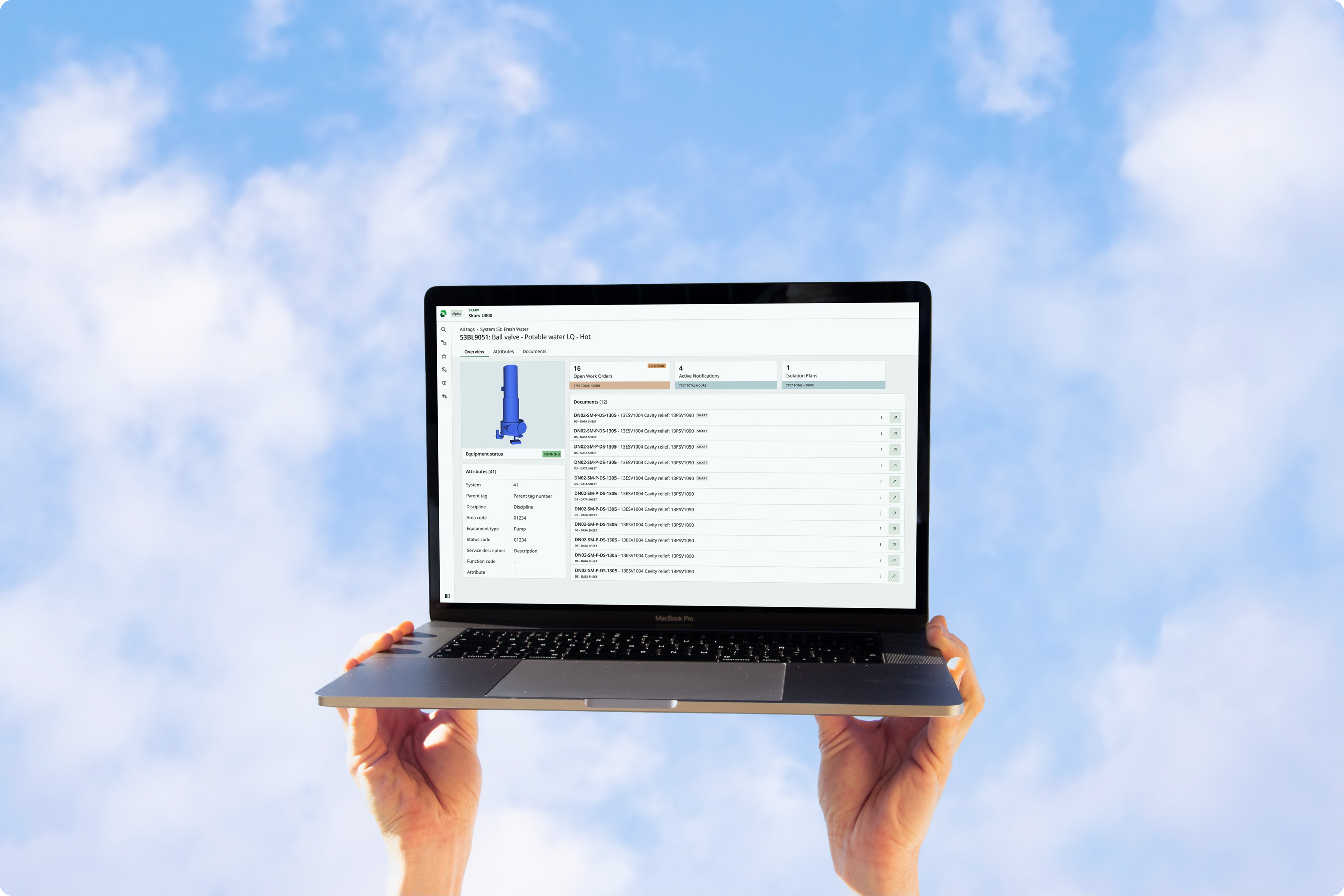
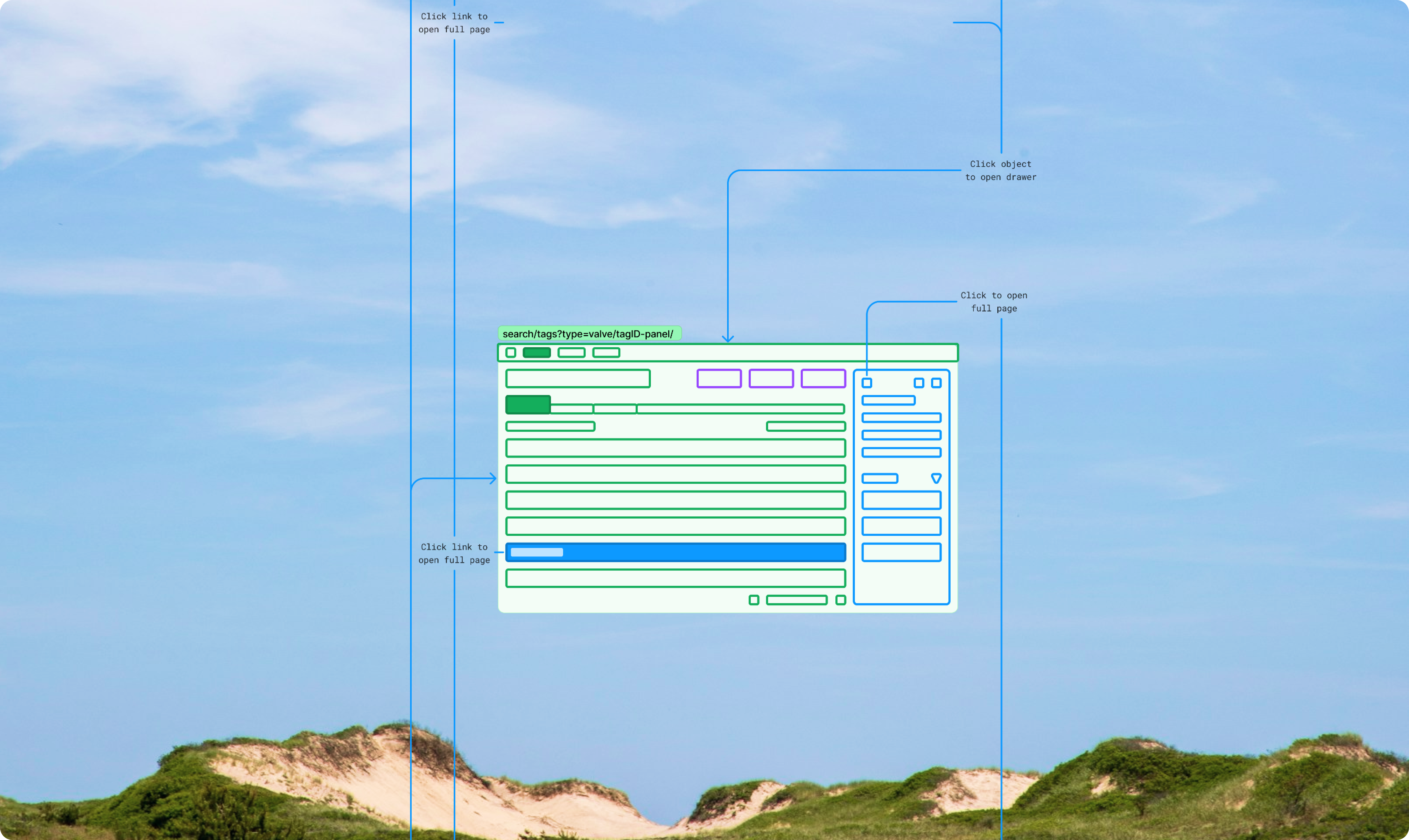
A key goal was the redesign of the Tag Page—a central hub for equipment-related information—ensuring it could serve as a single point of access for attributes, documents, work orders, and more.
We also set out to create consistency across the platform and build a structure that could scale with new features
over time.
Context
Aize is a complex software platform used for operating and maintaining oil & gas assets.
As part of a broader redesign effort, I collaborated on restructuring the platform’s Information Architecture (IA) to better support the workflows of engineers, planners, and operators.
Challenge
The existing IA had grown organically and lacked clarity around its core objects and surfaces.
One major challenge was to define the key entities in the system and ensure that every surface aligned with real user goals.
Among these, the Tag Page stood out as a critical screen where various types of data converge.
Goals
Our aim was to define and align the platform’s core objects across teams, simplify navigation in a data-dense environment, and support the daily work of users in high-risk, high-complexity contexts.
A key goal was the redesign of the Tag Page—a central hub for equipment-related information—ensuring it could serve as a single point of access for attributes, documents, work orders, and more.
We also set out to create consistency across the platform and build a structure that could scale with new features
over time.
(Information)
(Information)
Process
Working in Figma, FigJam and Dovetail, we mapped out the current state of the system, identifying redundancies, missing connections, and unclear object hierarchies. I collaborated with stakeholders from product, engineering, and end users offshore to understand how data flows between documents, equipment, and tasks.
From this, we extracted and clarified the primary objects—like tags, work orders, documents, and isolation plans—and restructured the navigation around them.
Process
Working in Figma, FigJam and Dovetail, we mapped out the current state of the system, identifying redundancies, missing connections, and unclear object hierarchies. I collaborated with stakeholders from product, engineering, and end users offshore to understand how data flows between documents, equipment, and tasks.
From this, we extracted and clarified the primary objects—like tags, work orders, documents, and isolation plans—and restructured the navigation around them.
(Information)
(Information)
The tag page
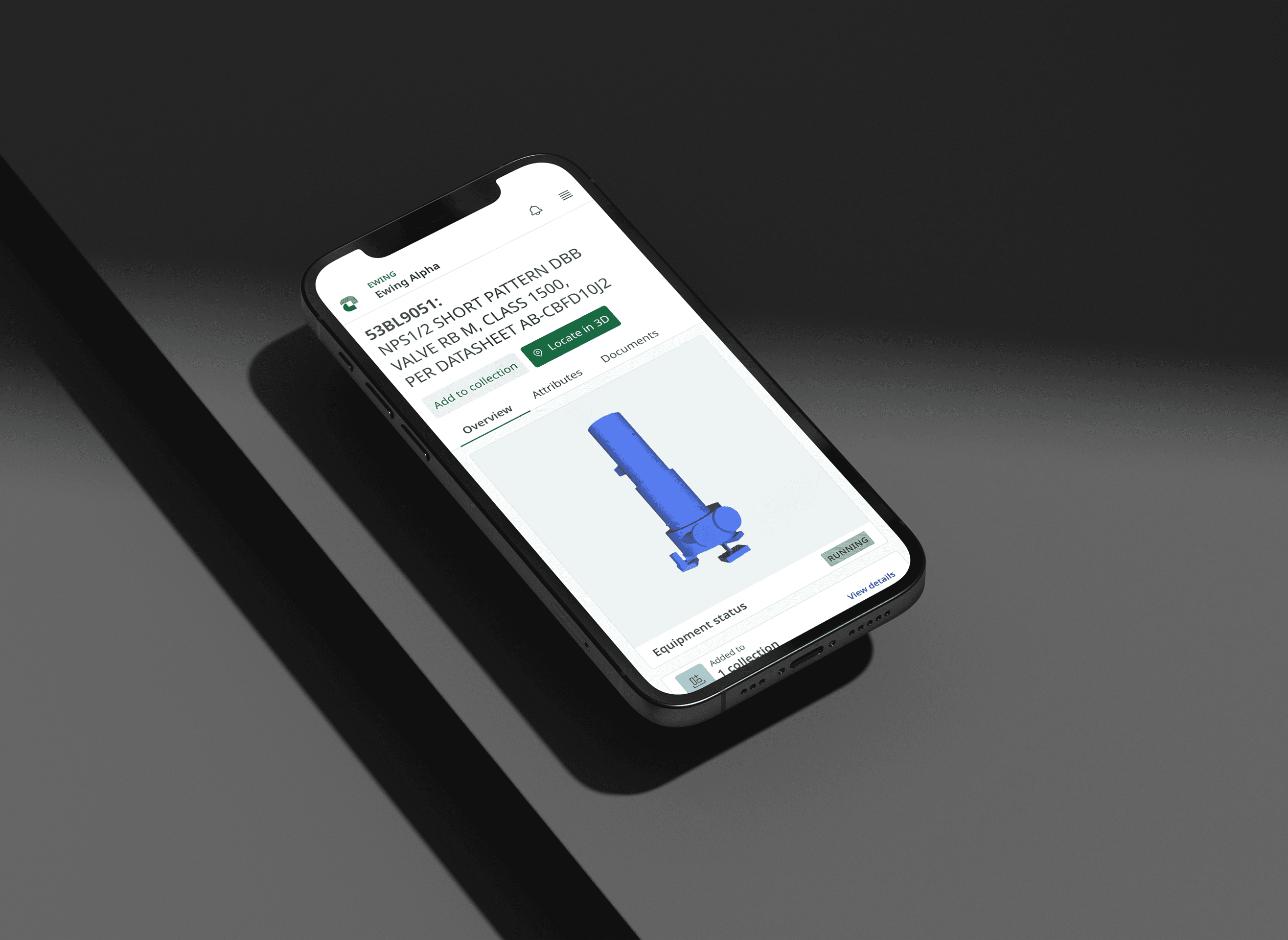
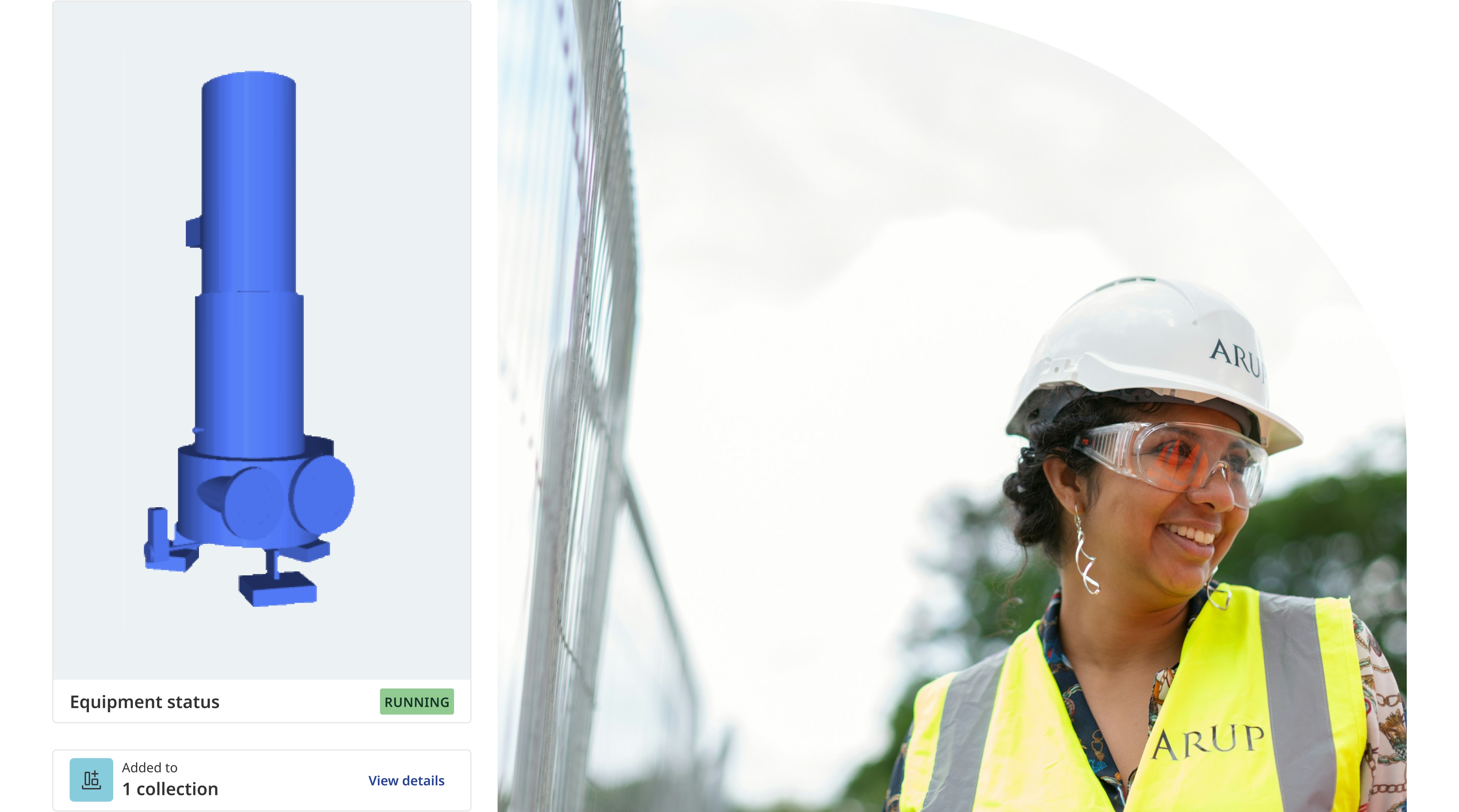
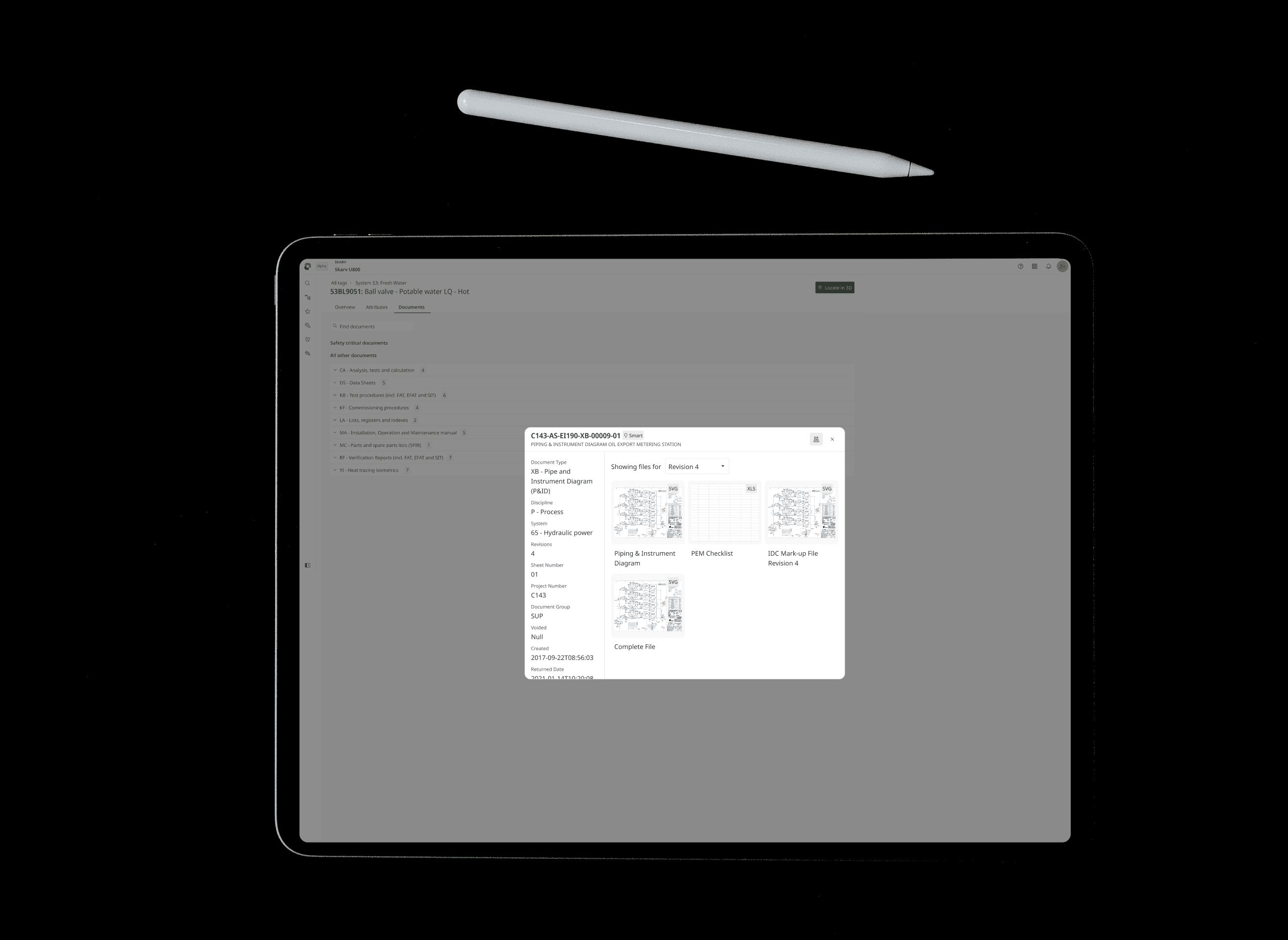
I led the design of the new Tag Page, a key surface used by planners and operators to track equipment across its lifecycle. The goal was to make it a one-stop-shop for all critical data related to a tag: attributes, linked documents, ongoing or past work orders, safety-critical isolation plans, and any active notifications. This aggregation allowed users to avoid context-switching between tools and documents, saving time and reducing errors in high-risk environments.
The tag page
I led the design of the new Tag Page, a key surface used by planners and operators to track equipment across its lifecycle. The goal was to make it a one-stop-shop for all critical data related to a tag: attributes, linked documents, ongoing or past work orders, safety-critical isolation plans, and any active notifications. This aggregation allowed users to avoid context-switching between tools and documents, saving time and reducing errors in high-risk environments.
(Information)
(Information)
The outcome
The redesigned IA and Tag Page helped streamline how users navigated the platform, improved discoverability of data, and laid the foundation for more scalable feature development. By centralizing key information, we empowered field operators and planners to make faster, more informed decisions.
The outcome
The redesigned IA and Tag Page helped streamline how users navigated the platform, improved discoverability of data, and laid the foundation for more scalable feature development. By centralizing key information, we empowered field operators and planners to make faster, more informed decisions.
More Projects



Let’s create Something Together

Let’s create Something Together
Let’s create Something Together