Two platforms. One product. Designing both sides of a staffing marketplace from scratch.
COMOD
Two platforms. One product. Designing both sides of a staffing marketplace from scratch.
COMOD
(Services)
(Services)
Product design
Product design
,
,
Design Systems
Design Systems
,
,
AI design
AI design
(Industry)
(Industry)
Marketplace
Marketplace
(Year)
(Year)
2025
2025
(Information)
(Information)
COMOD is a Norwegian staffing platform connecting shift-based employers with workers. I joined as the sole UX/UI designer at an early stage, owning the full design process across two very different products: a web-based dashboard for companies posting and managing shifts, and a mobile app for workers browsing and applying to jobs.
The challenge wasn't just designing two interfaces - it was designing two coherent experiences for users with fundamentally different needs, mental models, and contexts of use, while keeping the underlying system logic consistent across both.
COMOD is a Norwegian staffing platform connecting shift-based employers with workers. I joined as the sole UX/UI designer at an early stage, owning the full design process across two very different products: a web-based dashboard for companies posting and managing shifts, and a mobile app for workers browsing and applying to jobs.
The challenge wasn't just designing two interfaces - it was designing two coherent experiences for users with fundamentally different needs, mental models, and contexts of use, while keeping the underlying system logic consistent across both.
(Information)
(Information)
Discovery
COMOD started with a real gap: shift-based work is common, but the tools connecting workers and employers were either too formal (full employment platforms) or too informal (WhatsApp groups). The brief was to design both sides of a two-sided staffing platform from scratch - the company-facing web dashboard and the worker-facing mobile app - with no existing product to build on.
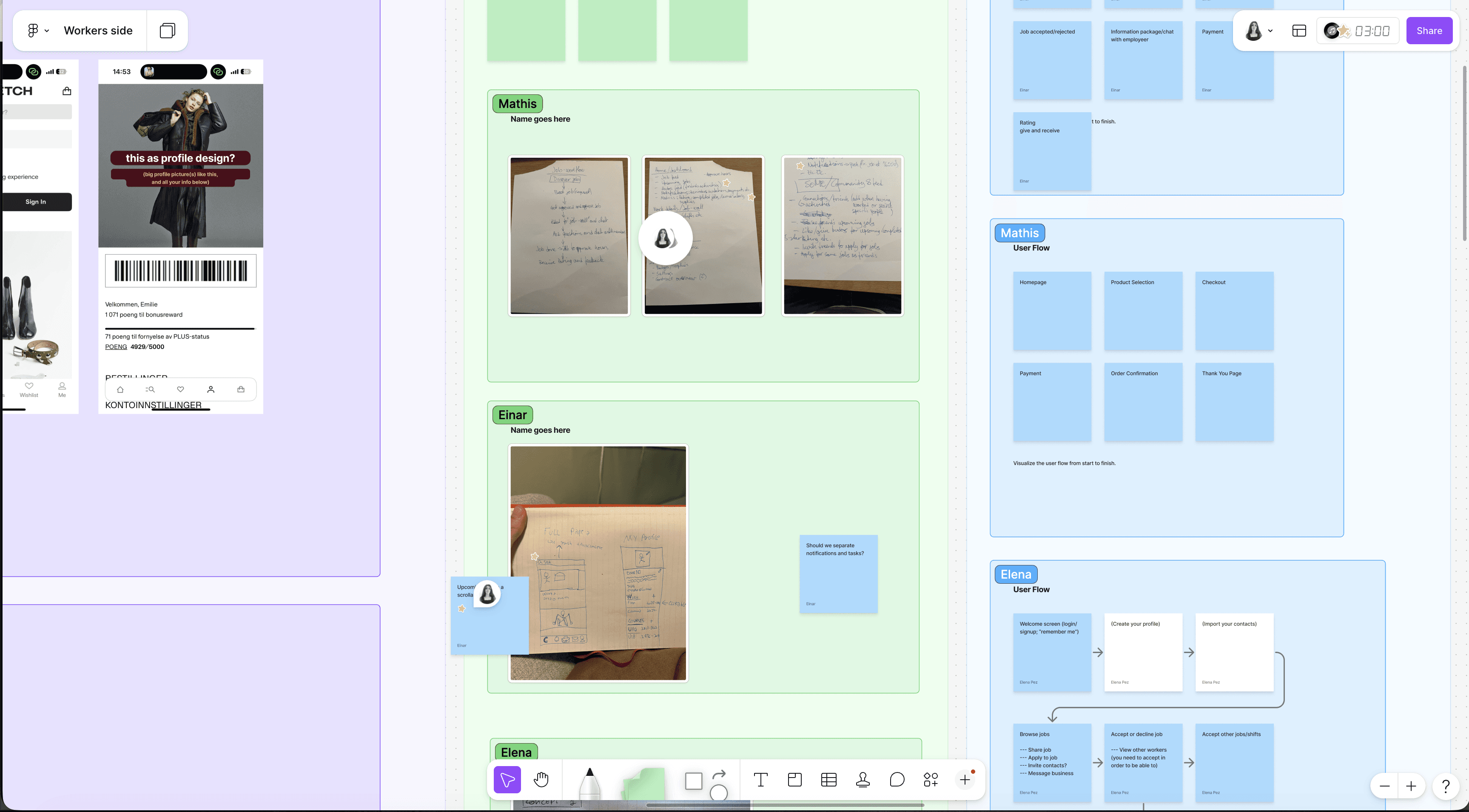
I ran an ideation session with early users and stakeholders to map what each side actually needed. On the worker side, the recurring themes were clarity of status, ease of application, and trust - workers wanted to know where they stood at every point in the process. On the business side, the need was speed and overview: posting jobs fast, managing multiple workers across shifts, and having a clear picture of what was happening without switching between tools.
The research surfaced five key moments that the design had to get right: the first time a worker sees the job feed, receiving and responding to an invitation, signing a contract, submitting hours within a 24-hour window, and receiving payment. Each of these was a trust-critical moment where a bad experience would cause drop-off or erode confidence in the platform.
Discovery
COMOD started with a real gap: shift-based work is common, but the tools connecting workers and employers were either too formal (full employment platforms) or too informal (WhatsApp groups). The brief was to design both sides of a two-sided staffing platform from scratch - the company-facing web dashboard and the worker-facing mobile app - with no existing product to build on.
I ran an ideation session with early users and stakeholders to map what each side actually needed. On the worker side, the recurring themes were clarity of status, ease of application, and trust - workers wanted to know where they stood at every point in the process. On the business side, the need was speed and overview: posting jobs fast, managing multiple workers across shifts, and having a clear picture of what was happening without switching between tools.
The research surfaced five key moments that the design had to get right: the first time a worker sees the job feed, receiving and responding to an invitation, signing a contract, submitting hours within a 24-hour window, and receiving payment. Each of these was a trust-critical moment where a bad experience would cause drop-off or erode confidence in the platform.
(Information)
(Information)
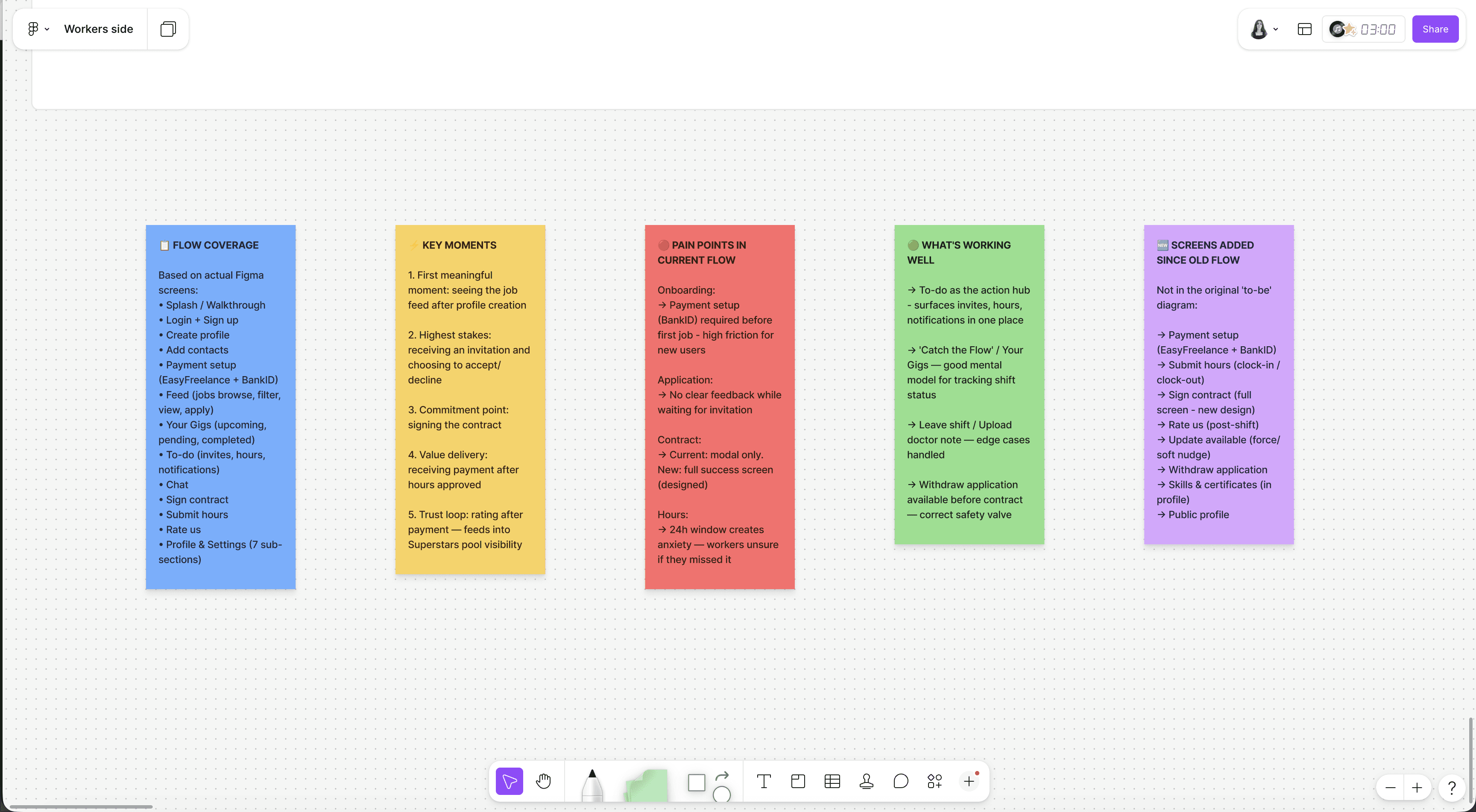
Pain points that shaped the design:
Payment setup (BankID) was required before a worker could apply to their first job - creating friction before they'd experienced any value
No feedback state while waiting for an employer decision - workers didn't know if their application had been seen
The 24-hour window for submitting hours created anxiety - workers weren't sure if they'd missed it
No clear status differentiation between pending, upcoming, and completed shifts
Pain points that shaped the design:
Payment setup (BankID) was required before a worker could apply to their first job - creating friction before they'd experienced any value
No feedback state while waiting for an employer decision - workers didn't know if their application had been seen
The 24-hour window for submitting hours created anxiety - workers weren't sure if they'd missed it
No clear status differentiation between pending, upcoming, and completed shifts

(Information)
(Information)
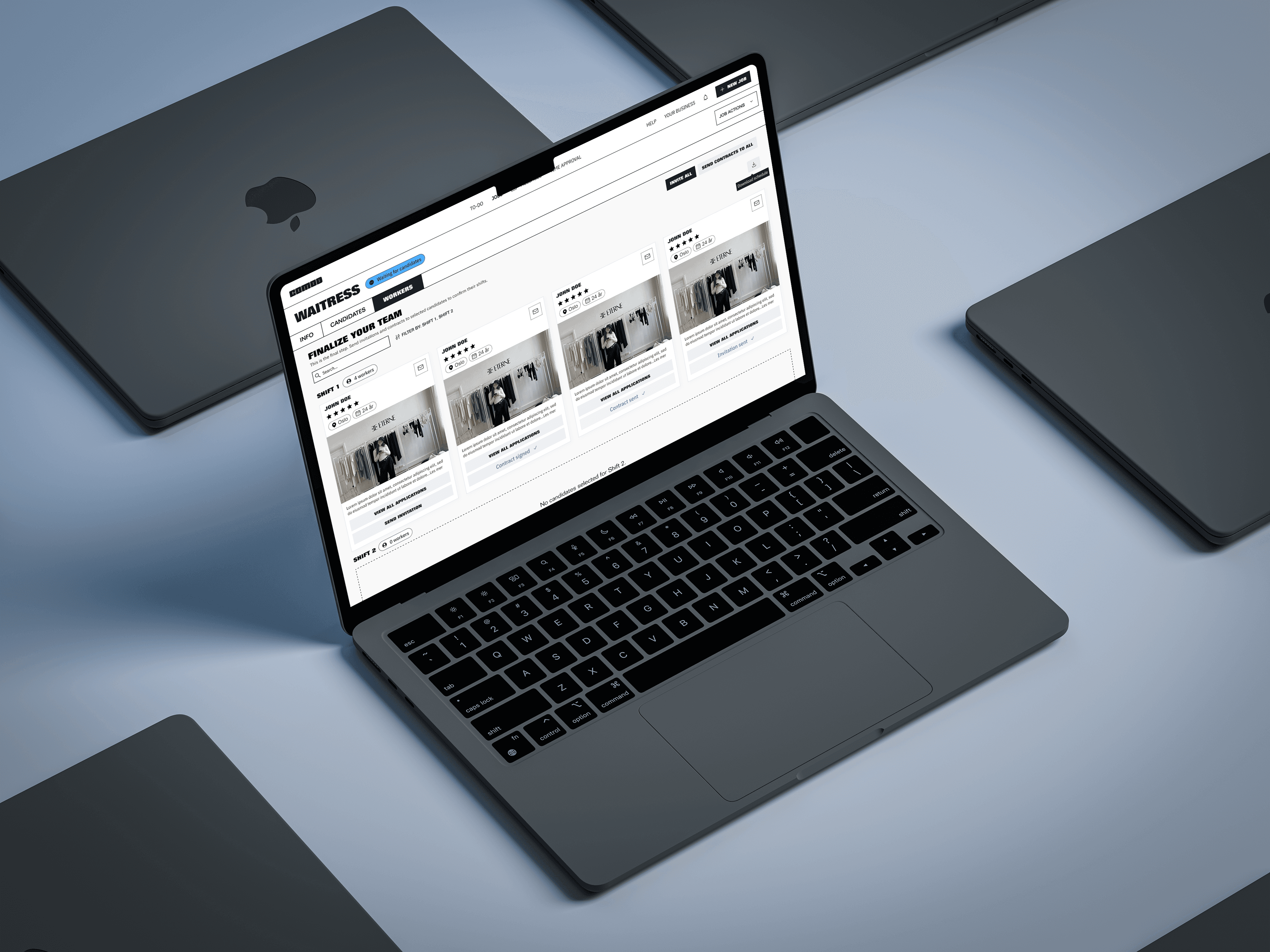
On the business side, the most critical and most broken interaction was job creation. Employers - often managers running events or venues - needed to post shifts quickly, sometimes in high-pressure situations. The original flow was a long blank form. Starting from scratch every time was cognitively expensive, and the drop-off before completion was high.
The key insight from research was that most employers were recreating the same job with minor variations. They weren't building from scratch - they were recreating from memory.
I designed three entry paths:
- AI-first: an intelligent copilot that drafts a job posting from a short input. The employer describes the shift in plain language and the system generates a structured draft they can review and edit. This became the default path.
- Copy from previous: for returning employers who want to reuse a past job with adjustments. Fast, familiar, low effort.
- Manual form: for employers who want full control from the start. Available but not the default.
All three paths share the same underlying data model, so the output is always consistent regardless of entry point. The hardest design work was the AI states - what happens when the draft is partially wrong, when a field is missing, or when the employer wants to override a suggestion. These correction and confirmation moments were designed to feel like collaboration rather than error handling, and to keep the employer in control at every step.
On the business side, the most critical and most broken interaction was job creation. Employers - often managers running events or venues - needed to post shifts quickly, sometimes in high-pressure situations. The original flow was a long blank form. Starting from scratch every time was cognitively expensive, and the drop-off before completion was high.
The key insight from research was that most employers were recreating the same job with minor variations. They weren't building from scratch - they were recreating from memory.
I designed three entry paths:
- AI-first: an intelligent copilot that drafts a job posting from a short input. The employer describes the shift in plain language and the system generates a structured draft they can review and edit. This became the default path.
- Copy from previous: for returning employers who want to reuse a past job with adjustments. Fast, familiar, low effort.
- Manual form: for employers who want full control from the start. Available but not the default.
All three paths share the same underlying data model, so the output is always consistent regardless of entry point. The hardest design work was the AI states - what happens when the draft is partially wrong, when a field is missing, or when the employer wants to override a suggestion. These correction and confirmation moments were designed to feel like collaboration rather than error handling, and to keep the employer in control at every step.


(Information)
(Information)
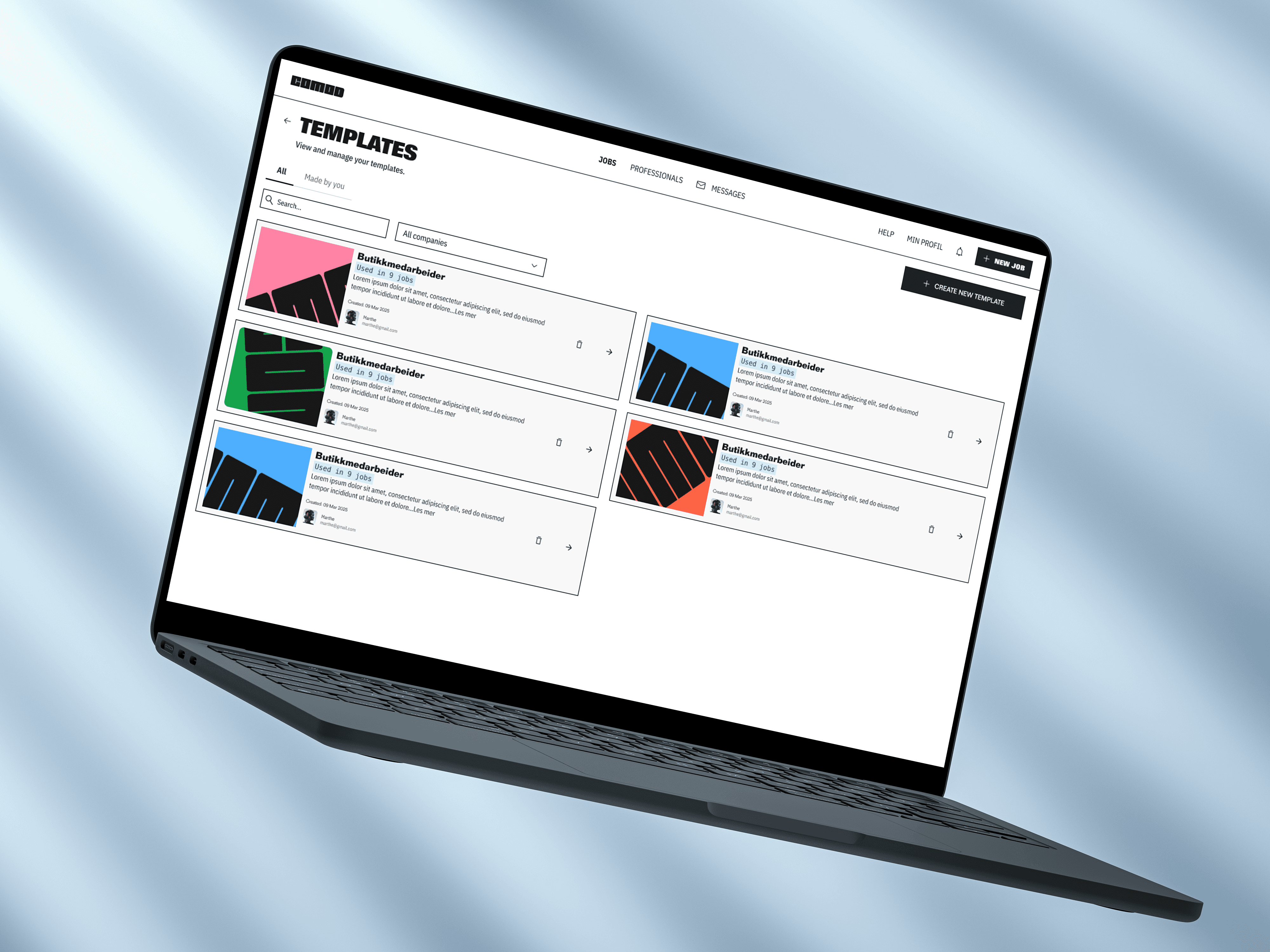
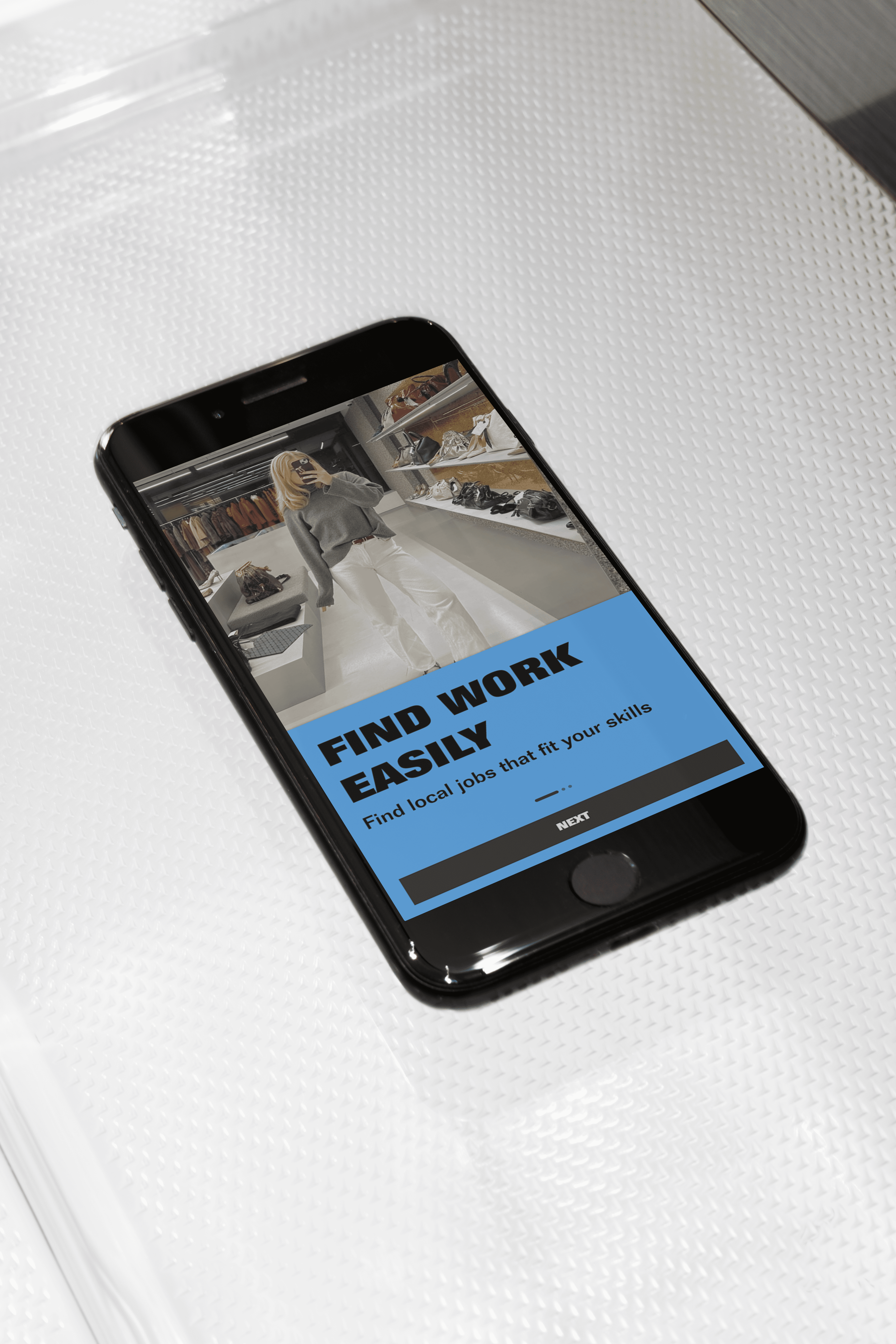
The visual language of COMOD is deliberately bold and unapologetic, designed to stand out in a category often dominated by neutral, invisible interfaces. Large colour fields, high-contrast typography, and graphic repetition are used to create a strong sense of identity and recognition across both the employer website and the worker app. Colour functions as both navigation and attitude. The art direction embraces visibility and confidence, reflecting the social and public nature of the work being facilitated: shifts, events, people, and real-world interactions. Interfaces are clean and structured, but never anonymous. Content is framed boldly, allowing imagery, listings, and calls to action to feel immediate and direct.
COMOD is not “calm SaaS”. It’s confident, graphic, and socially visible.
Visually loud, assertive, and opinionated, and the copy needs to own that instead of downplaying it.
The visual language of COMOD is deliberately bold and unapologetic, designed to stand out in a category often dominated by neutral, invisible interfaces. Large colour fields, high-contrast typography, and graphic repetition are used to create a strong sense of identity and recognition across both the employer website and the worker app. Colour functions as both navigation and attitude. The art direction embraces visibility and confidence, reflecting the social and public nature of the work being facilitated: shifts, events, people, and real-world interactions. Interfaces are clean and structured, but never anonymous. Content is framed boldly, allowing imagery, listings, and calls to action to feel immediate and direct.
COMOD is not “calm SaaS”. It’s confident, graphic, and socially visible.
Visually loud, assertive, and opinionated, and the copy needs to own that instead of downplaying it.

More Projects


Let’s create Something Together

Let’s create Something Together
Let’s create Something Together